Gumshoe is going to let players create a story that's like the film noir of the 1930s, 40s, and 50s, or like the stories of Dashiell Hammett or James Ellroy. You've got hardbitten detectives walking down mean streets, where everybody wants something and everybody's got something to hide.
Right now, I see the game taking the following form:
(1) The players get together and specify a locale and a time period, like 1950s LA or Depression-era New York. It may or may not be necessary at this point to go down another level of specificity: okay, it's 1950s LA, but is the story centered around a movie studio or a precinct house? At some point, location cards get selected and laid out; the location in which a scene gets played out will have some effect on conflict resolution. The selected locale will have an effect on what location cards are "playable."
(2) Players come up with potential cases framed as situations or facts of the the case, writing them down on index cards. "My wife is missing," "There's a man who owes me money," "I want to get away from my violent pimp." Players then vote on which case the game will be about. I envision a kind of bidding, in which players distribute six points among three cases (i.e., 3, 2, and 1, or 2, 2, 2, or even 4, 1, 1), not including their own. The case with the most points is the one the game is about.
(3) Now roles need to be assigned to players. One will be the Client, who plays a large part in defining the initial situation of the game. Another will be the Gumshoe, who is most active really only at the end; the rest of the time, he's just going around enabling other characters to define themselves, and position themselves with respect to other characters. Other players take the roles of various antagonists and supporting characters in the story.
It's important that there be a chance for any other player to be the Client or the Gumshoe; the way to do this I think involves another round of bidding in which you allocate the points you got between Client, Gumshoe, and other roles. This gives the player who got more votes an advantage, which may require outlawing 2, 2, 2 as a distibution of votes, since one is motivated to do that by the strategic concern not to disadvantage yourself by giving someone more votes than you're likely to get.
(4) Once roles are assigned, the Client starts things rolling by framing a scene with the Gumshoe in which the basics of the case are outlined. Then other players can specify their characters, including their Secrets and their Desires (or maybe the client parcels those out based on another round of writing).
(5) Other players get to frame scenes wherein they encounter the Gumshoe. Statements are advanced, subjected to doubt and verification, or revealed to be lies by the mechanics of game resolution.
(6) The Gumshoe gets to frame a final scene in which the central conflict or mystery of the game is resolved.
That's what I've got so far. Stay tuned!
Monday, May 22, 2006


Ganakagok: A Fantasy Roleplaying Game
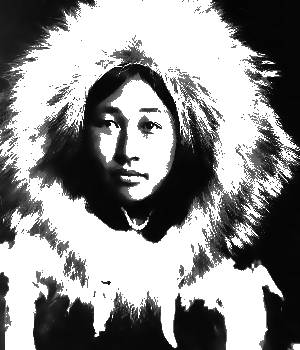
Ganakagok, my Iron Game Chef game (runner-up, I should say) from 2004 is finally published. That's a long time to be working on a project, but of course my dissertation took longer.
Two other games came out of that contest (last year) that I'm aware of, Ben Lehman's Polaris and Tim Kleinert's The Mountain Witch. I like to think that that puts Ganakagok in august company.
Of course, putting something up on Lulu isn't quite the same as fronting for an actual print run, but I'll be hauling copies to Dexcon this year and to other cons down the road.
This is the first thing I ever wrote about Ganakagok, once the Iron Game Chef muse spoke to me:
DAWN BREAKS UPON THE ISLAND OF ICE...So what's Ganakagok like to play? (There're actual play reports from last year's Dexcon here and here). In essence, it's like any other roleplaying game: you create a character who is then located in a particular in-game situation to which you react, making reference as you do to the game's rules for resolving character actions. The devil, as they say, is in the details.
For a thousand years, the stars have shone down on Halakat, the Sea of Tears, burning brightly in a sky that was always dark. Now in the east the horizon has brightened to grey, and the stars have begun to fade. The shamans of the People speak of the rising of the Sun.
For a thousand years, the People have lived upon Ganakagok, the Island of Ice, in the midst of the Sea of Tears. This mountain of ice, floating in a cold sea, has been carved into soaring spires and dizzying stairs, immense caverns and intricate labyrinths. The legends of the People speak of the Ancient Ones who carved it so, to escape the falling of Night.
Dawn is coming to the Island of Ice. The stars are fading. The sea is growing warmer. The world is changing. Will the People survive the change?
Character creation begins with a draw of three cards from the Ganakagok deck, which is essentially a normal 52-card deck in which the normal suits have been replaced with Tears, Flames, Storms, and Stars and the face cards with Ancient, Man, Woman, and Child (so you draw the Ancient of Tears, not the Ace of Spades). Each card has additional motifs (so the Ancient of Tears is also called Anuk, meaning "Polar Bear" or "to overcome or master"). The suit and value of the card can also produce an oracular meaning (see the description of the deck in the preview in Lulu).
Each player reads his cards to come up with a "truth-vision" (what convinced him that Ganakagok was changing), a change-hope (what he hopes the change will bring), and a change-fear (what he fears likewise). Once the player has done that (and it sometimes takes a lot of coaching to enable a player to make the leap to "just reading the cards"), the character is, oh, 90% complete. There are still some in-game and mechanical choices to be made (the character's name and identity, his stats and "Gifts"), but once you've figured out your character's backstory, the rest is easy. And figuring it out is the first thing Ganakagok makes you do.
Based on what the players come up with in terms of characters, the GM fleshes out the situation, coming up with an "imagined cosmology" and mechanical rules to rules to support it (the Metaplot); these are largely cut-offs and thresholds for determining who gets to say what happens at the end of the game. The GM also frames the initial situation for the tribe and for each player individually each turn. Ganakagok cards play a heavy role here as well.
Each turn, the GM draws and reads a Ganakagok card to determine a character's basic situation. The character acts in response to that situation (the player describes his pursuit of a particular goal or course of action) until the GM decides that things have reached a crux: it's time to roll dice. Stakes are set by reference to a card, and the roll of the dice determines the initial trend of the action (good or bad) as well as who gets to narrate the immediate situation (player or adversary). At this point, people get to "react," going around the table in order invoking Gifts to shift dice up or down and thus change the outcome or narration rights or both. Once everyone is finished reacting, the consequences are narrated and the player assigns a kind of "fallout" by specifying how the Good and Bad Medicine of the action manifest.
Each player-turn takes a while, but because other players can participate through their reactions, engagement stays pretty high.
Over the course of the game, Good and Bad Medicine totals will build up for each character, for the People as a whole, and for Ganakagok (i.e., the world). At the end of the game (after a certain number of turns or a specified time interval, e.g.), if you have more Good Medicine than Bad, things go your way; otherwise, they don't. Of course, if things turn out bad for Ganakagok, having things go your way may just mean the best seat in the house at the Apocalypse, but that's part of the fun. The "final fates" of Ganakagok and the People get narrated based on the Metaplot rules the GM created, and players get to narrate their characters' final fates in line with what has already been narrated.
And that's pretty much the game.
Friday, January 20, 2006
Rune Saga: Narration Constraints
It's probably worth it to think about how to establish bounds on what can be done by the narrator (that is, the person with narrative control at a given time). The issues that matter I think include the following:
(1) Is the narrator acting as PC or as DM? That is, is he thinking advancing the dramatic interests of a particular character or about providing adversity to that character?
(2) Is a particular character involved in the narration the creation of the narrator or of somebody else (and was that person involved in the contest for narration rights or not)?
This still needs work.
(1) Is the narrator acting as PC or as DM? That is, is he thinking advancing the dramatic interests of a particular character or about providing adversity to that character?
(2) Is a particular character involved in the narration the creation of the narrator or of somebody else (and was that person involved in the contest for narration rights or not)?
(3) How does the narration implicate the character's, um, character? That is, to what extent is the narration something happening to the character or something chosen by the character? Call the former "external locus of control" and the latter "internal locus of control." Internal locus narration creates the character's persona, and this is [unexamined assumption] something that probably belongs to the character's "owner" (that is, creator) [/unexamined assumption].
(4) To what extent does the narration extend or contradict what has been specified in previous turns? Or, better, how consequential is the narration?
So in the post from Jan 19, Joe's initial narration invokes Andaman, Melina, and the Heartshard. He's bringing them into the scene in order to frame up some possible tough choices for Daemien. Joe leaves the specific threat unspecified; Andaman may be going to kill or hurt Melina, or maybe he's a romantic rival. But it's clear that Joe is acting as the DM. Andaman and Melina are characters he created, and so he has "ownership" of them. The Heartshard is something I created, and so I guess I have ownership of it. Should I be able to veto Joe's assertion that the Heartshard has the power to lead its possessor to that which is alien to the Wild Wood? I want to argue that the DM-function trumps ownership in this case--especially because there is a runic motif that Joe is invoking to justify the inclusion of that element in his narration (i.e., ghot luemas, a thing of blood). The narration ascribes intentionality to Andaman (he is tracking something) and emotions to Melina (she's lost and afraid), which is something that's okay to do with a character you created.
(4) To what extent does the narration extend or contradict what has been specified in previous turns? Or, better, how consequential is the narration?
So in the post from Jan 19, Joe's initial narration invokes Andaman, Melina, and the Heartshard. He's bringing them into the scene in order to frame up some possible tough choices for Daemien. Joe leaves the specific threat unspecified; Andaman may be going to kill or hurt Melina, or maybe he's a romantic rival. But it's clear that Joe is acting as the DM. Andaman and Melina are characters he created, and so he has "ownership" of them. The Heartshard is something I created, and so I guess I have ownership of it. Should I be able to veto Joe's assertion that the Heartshard has the power to lead its possessor to that which is alien to the Wild Wood? I want to argue that the DM-function trumps ownership in this case--especially because there is a runic motif that Joe is invoking to justify the inclusion of that element in his narration (i.e., ghot luemas, a thing of blood). The narration ascribes intentionality to Andaman (he is tracking something) and emotions to Melina (she's lost and afraid), which is something that's okay to do with a character you created.
Thursday, January 19, 2006
Rune Saga: The Heart of the Wild Wood
Let's stipulate that if you continue a story after some interval (as in a "campaign," e.g.), you throw in your hand and deal out new cards when you get back together to play. So imagine Joe and I are going to continue the story of the Wild Wood after having to deal with the real world for a while. We each get three cards.
My hand: Lady of Stars, Tree of Coins, Mount of Staves.
Joe's hand: Man of Stars, Tree of Staves, Child of Stars.
On my turn, Joe is DM. He flips the top card of the deck; it's Sun of Stars (ghot luemas), which can be read as an artifact of blood.
I see what he's doing; does Daemien come to Melina's rescue? Does she even need rescuing? Hrmm. I want to use my Stars, since it produces the best glyph (Increase) but I probably won't get control. But I'll play Lady of Stars to establish as a character the she-wolf that befriended Daemien.
I roll a 3; Joe gets control. But the glyph is pretty positive for me: ghot bes (Increase) He gains advantage by his action, and his fortunes increase.
Now it's Joe's turn; I'm the DM. I think it should be a rule that if you start your turn "on the scene" as it were, you can play a card to immediately continue the action, reading the glyph that intervenes as well as the rune you play. So Joe plays Tree of Staves to create the glyph "Ambition" (Andaman's). His Virtue is 3 and he rolls a 2, so gets to read it; he describes Andaman's desire to fulfill his oath to Melina's father. I make him say that he hurries after the wolf and the girl; he isn't careful, and he doesn't pay attention to the quiet rustlings around him. This is to include the meaning of overreaching that ambition contains. Andaman bursts into the cave where Melina is kneeling beside Daemien; he recognizes the prince.
Now there are two primary characters in the same scene. Do we need special rules? Or are the special powers afforded the DM enough?
Have to think about this.
My hand: Lady of Stars, Tree of Coins, Mount of Staves.
Joe's hand: Man of Stars, Tree of Staves, Child of Stars.
On my turn, Joe is DM. He flips the top card of the deck; it's Sun of Stars (ghot luemas), which can be read as an artifact of blood.
The whisperings of the Heartshard lead Andaman to his quarry; the ancient heart of the forest can sense that which is alien to it. He comes upon Melina, lost alone and afraid, in the dark of night.
I see what he's doing; does Daemien come to Melina's rescue? Does she even need rescuing? Hrmm. I want to use my Stars, since it produces the best glyph (Increase) but I probably won't get control. But I'll play Lady of Stars to establish as a character the she-wolf that befriended Daemien.
There is a growling in the darkness as Andaman nears the firelight of Melina's rude campsite, and he pauses in shadows. Glittering green eyes stare out from the trees. A great grey she-wolf, larger than a mastiff, pads forward with tongue lolling out of her grinning jaws. Around her neck is a silver chain that Melina recognizes as one that she'd given her prince Daemien.
I roll a 3; Joe gets control. But the glyph is pretty positive for me: ghot bes (Increase) He gains advantage by his action, and his fortunes increase.
"Who are you?" says Melina to the she-wolf. "Do you know my Daemien? Will you take me to him?" The wolf makes a noise like a sneeze, and Melina laughs. She follows her away from the firelight and deeper into the woods. "Isn't this lucky?" she says to the wolf, though she expects no response. "Both of us who love him are coming to him." Andaman smiles mirthlessly as he follows.
Now it's Joe's turn; I'm the DM. I think it should be a rule that if you start your turn "on the scene" as it were, you can play a card to immediately continue the action, reading the glyph that intervenes as well as the rune you play. So Joe plays Tree of Staves to create the glyph "Ambition" (Andaman's). His Virtue is 3 and he rolls a 2, so gets to read it; he describes Andaman's desire to fulfill his oath to Melina's father. I make him say that he hurries after the wolf and the girl; he isn't careful, and he doesn't pay attention to the quiet rustlings around him. This is to include the meaning of overreaching that ambition contains. Andaman bursts into the cave where Melina is kneeling beside Daemien; he recognizes the prince.
Now there are two primary characters in the same scene. Do we need special rules? Or are the special powers afforded the DM enough?
Have to think about this.
Rune Saga: Joe's Turn
There are only two players, me and Joe. I've just taken my turn. Now I'm the Demiurgical Mediator (DM--get it?) and he's the PC (principal character).
Joe needs to create a character. He draws Man of Coins, Tree of Stars, and World of Swords.
Joe needs to create a character. He draws Man of Coins, Tree of Stars, and World of Swords.
- Man of Coins cadhtaenas King (Escape). One who is contented. Event: Someone evades pursuit.
- Tree of Stars dinluemas Thought (Counteraction). A church, sect, or cult; a faction committed to a particular means or end. Event: A hero learns of a means to redress an act of villainy.
- cadh din Arrival The one who acts comes to a stopping-place. This place may not be the end, but a leg of his journey is complete.
- World of Swords hinsothas War (Death). An evil place; a time of grief. Event: Something long awaited comes to pass; old things pass away; an era closes.
- din hin Strength The one who acts, by virtue of his strength, achieves a great success.
Andaman the Bold leads the chase through the Wild Wood, but Daemien evades the hunters [Man of Coins (Escape)] when the wolf-spirits of the forest harry them through winding and tangled thickets and underbrush [Tree of Stars (Totem-Spirit Maze)]. Winning free of the green labyrinth, Andaman and his companions face the Dark Heart of the Wild Wood [cadh din (Arrival)], an ancient and evil tree spirit that descends upon them in a frenzy of thorns that tear at their flesh and vines that bind their limbs. The other hunters are killed in the fight against the creature [World of Swords (grief)], but Andaman finds the resinous pulsing red crystal at the core of the Dark Heart and crushes it by main strength [Strength (great success)].Joe discards his cards and draws three new ones (Mount of Coins, Child of Swords, and Tree of Swords). I draw a card to serve as his initial situation, and it's Mount of Coins (ethtaenas Treasure (Receipt of Gift). A secret. Event: A hero receives a helpful gift). I decide that the card represents the Heartshard, a splinter of the Dark Heart of the Wild Wood.
The Heartshard pulses with an evil crimson glow; it is an irregularly shaped globule about the size of a man's fist. A whispering, half-heard voice seems to come from nearby, speaking urgently but just below the threshold of perception.Joe needs to decide what to do. Playing Sun of Stars gets him Sanctuary, but only a 33% of winning narrative control. Playing either of the Swords gets him a 50% of winning control, with Child of Swords becoming Adversity and Tree of Swords becoming Respite. He decides that the notion of a struggle between Andaman and the Heartshard makes the most sense, so plays Tree of Swords.
The obscene jewel colors Andaman's vision like blood, and the evil whispers become clearer, full of putrid corruption--atavistic desire--seething rage. Andaman claps his hands to his ears to shut out the insane mutterings. "Get out of my head!" he screams.He rolls a 2 and so wins narrative control. He says,
The effort of will brings him respite, and he wraps the Heartshard in bloody cloth cut from one of his dead companion's cloak.And there the turn ends; we draw cards to bring our hands back up to three and shuffle our discards into the deck.
Wednesday, January 18, 2006
Rune Saga: What a Turn Might Look Like
It's my turn; I'm playing Prince Daemien. Another player (the person whose turn is next, let's say, or better--the person directly across the table from me, or the [N/2]th player from me, rounded down) draws a card from the rune deck and reads it as something relevant to my character.
Let's say Joe draws besothas, the Lady of Swords.
Joe says, "The folly is not Melina's--it's Daemien's! All this is about his choice to go haring off into the woods instead of trying to get home. As Melina flees from her pursuers, searching for her lost love, she is spied by Daemien, who is skulking around there. He lets her pass by -- a big mistake! -- and is spotted by the huntsmen, who start chasing him through the woods."
And that's the turn. The next player gets a situation card, and play proceeds from there.
Let's say Joe draws besothas, the Lady of Swords.
Lady of Swords [besothas] Maiden (Departure). One who is in danger; one who experiences grief or misfortune. Event: A hero leaves his home or proper place.Joe likes the notion of a grieving maiden; he imagines the girl Daemien has left behind. He introduces her as a character, an innocent hurt by Daemien's abandonment.
Damosel Melina, the daughter of rich noble family, had accepted her betrothal to Prince Daemien at a midsummer festival before his departure for the wilderness. Their courtship over the next few weeks had made her happy beyond her dreams, and his disappearance has weighed upon her. She has decided to leave home and search for him, despite the wishes of her father that she accept a new suitor.I have a hand of cards:
- Mount of Stars ethluemas Guidance (Violation). An expanse of water. Event: A hero violates an elder's interdiction (perhaps unknowingly).
- Child of Staves aelmaegas Seeker (Reconnaissance). One who desires knowledge. Event: A villain deploys minions against a hero.
- Sun of Staves ghotmaegas Discovery (Remediation). A scroll, book, or map. Event: A hero finds something that is needed or has been missing.
Damosel Melina leaves her home and journeys to the wood where Daemien was last seen. Her father sends his best huntsmen to find her and bring her home.Now there's a moment of resolution. The glyph in question is produced by the two cards that have just been played: Joe's situation card and my response. The glyph is besael.
bes ael Folly The one who acts is led astray by his choice. He makes himself vulnerable to the stratagems of his enemies.Who gets to decide what this means? Either me or Joe, based on the roll of a die. Since my response was a Staves card, we use Daemien's Wisdom as the target. If I roll 4 or less on a six-sided die, I get to narrate what besael means here. If I roll a 5 or a 6, Joe does. Let's pretend I roll a 5. Aargh!
Joe says, "The folly is not Melina's--it's Daemien's! All this is about his choice to go haring off into the woods instead of trying to get home. As Melina flees from her pursuers, searching for her lost love, she is spied by Daemien, who is skulking around there. He lets her pass by -- a big mistake! -- and is spotted by the huntsmen, who start chasing him through the woods."
And that's the turn. The next player gets a situation card, and play proceeds from there.
Rune Saga: Attributes
There are four attributes whose function in play is to influence narrative control.
I'm still reading and reading about Greimas, so let's see if we can map the four attributes into the semiotic square.
Remember that a semiotic square is constructed like this:
that is, a positive term contrasts with a negative term (the top row), each of which has a corresponding complement below it, consisting of contradictions of both the positive term (both positive term & negative term)and negative term (neither positive term nor negative term).
- The attribute associated with Swords is Bravery.
- The attribute associated with Coins is Cleverness.
- The attribute associated with Stars is Virtue (or Piety).
- The attribute associated with Staves is Wisdom.
I'm still reading and reading about Greimas, so let's see if we can map the four attributes into the semiotic square.
Remember that a semiotic square is constructed like this:
 S: semantic category

        s  <---> non s
             X
~(s|non s) <---> s & non s

~S: semantic anti-category
that is, a positive term contrasts with a negative term (the top row), each of which has a corresponding complement below it, consisting of contradictions of both the positive term (both positive term & negative term)and negative term (neither positive term nor negative term).
 S: 'Honor' ['Valor']

      bravery <---> cowardice
                X
foolhardiness <---> prudence

~S: 'Survival' ['Discretion']
Subscribe to:
Posts (Atom)
About Me

- Bill White
- A communication Ph.D., I teach public speaking and media-related courses in the middle of PA. I do research on scholarly/scientific communication, and I write & play roleplaying games.